
Shirin Neshat: Exploring the Space Between Memory, Identity, and Freedom
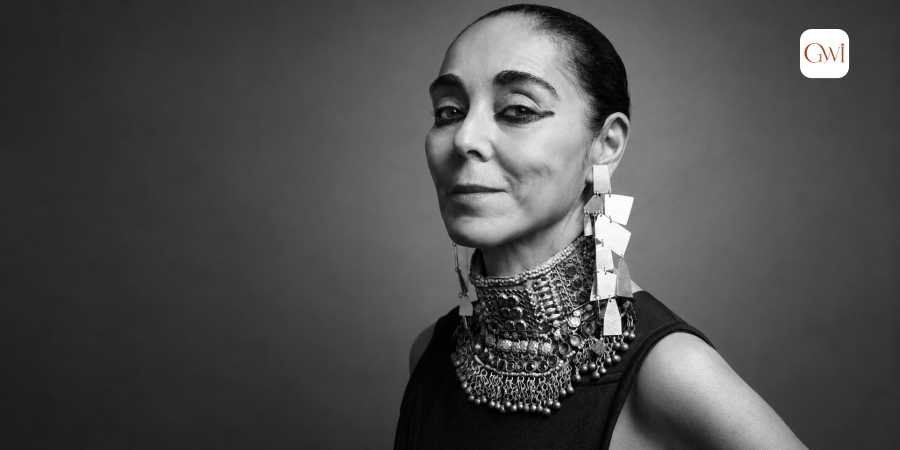
Shirin Neshat and the Art of Examining Personal Truths Through Powerful Visual Storytelling
On the contrary, the capacity to ask hard questions outside the scope of ordinary communication belongs to art. Pictures of faces, gestures, blank space, or some inscriptions may make spectators reconsider their views concerning issues of identity and affiliation as well as the way of life of people from totally different backgrounds. With the help of visual art, Shirin Neshat succeeds in dealing with such complex things in a sophisticated manner.
Shirin Neshat is a photographer, creator of motion imagery, filmmaker, and visual artist working in various visual media. For her, art is not about creating beautiful pictures but rather a means of creating situations that will make people think using symbols, composition, and a human being as elements.
Turning Personal Experience Into a Wider Conversation
An artist’s background can also be taken into account as the starting point rather than the obstacle to the limits of his imagination. In case of Neshat, living in-between cultures results in the emergence of art language that revolves around the notions of distance, memory, and quest for belonging. Hence, in her art, personal questions enter the discussion about the way of approaching the issue of identity in the society and the selection of individuals that will play an important role in its further development.
Shirin Neshat tackles this problem through imagery that creates ambiguity in the works. For example, she may depict the face of a person but omit the context of his life; in other cases, she can portray him as moving within the artificially created space with suggestions of tensions, hesitations, and oppositions. Viewers are encouraged to act as interpreters of such imagery.
It makes the art of Shirin Neshat emotionally unusual since even despite coming from different cultural and political backgrounds, people discover certain elements that modify their initial impression.
The Human Face as a Place of Expression
Although an artistic work may save one’s appearance, there still could be some questions posed in relation to the issues of dignity, visibility, and control. Position of the eyes of the depicted person, his/her placement in the picture, and the relation between the depicted object and the surroundings could influence the perception of the picture by the audience.
In her works, Neshat often gives the main role to a human figure in this process. The visual composition encourages people to see humans not as symbols of the culture or political discourse, but as real humans with their own interior. Faces could express different emotions, like self-confidence, secretiveness, vulnerability or unreadability, but it doesn’t mean that one could be sure in the feelings of the other person.
In the works of Shirin Neshat, the focus on humanity makes it possible to raise the question of the difference between the way how people see themselves and the way they are seen by other people. People are capable of showing the rest of society what is expected from them, but hide their emotions from everyone else.
Words, Images, and the Meaning Between Them
It is possible to create such written language that it will have meanings beyond the content of the message it conveys. The style of the words used in such a case could represent experiences and memories of the reader, the type of education and upbringing, religion, culture, etc. In the event that the words appear in the picture, the perception of the person depicted in it and of the situation itself may change.
Integration of the Persian language into the photographs of Neshat shows how written language can become an inseparable element of visual art. Not only the use of writing brings additional visual effect to the picture, but it also creates an element of connection between those things which people see, which people can read and those elements which seem to them strange.
In this way, the question arises: how many meanings may a person grasp through the image if this person does not know the language in which the image is written?
In this way, Shirin Neshat shows how artistic language can express multiple meanings.
Why Moving Images Change the Experience
Photograph captures only a certain period in time, but the film implies it. It might be a character entering the room, hesitating to say something, looking away from the other person, or keeping silent while his or her surrounding changes. Such details might completely change the atmosphere of the scene.
The use of video and cinema art by Shirin Neshat enables the artist to analyze relations between different things taking place depending on their rhythm, sound, movements, and space organization. All the notions do not have to be defined by the artist because the audience might understand the meaning of these things on its own.
Sometimes the silence becomes as informative as dialogues and change in perspective might completely change the perception of the previous scenes.
This method gives the audience more time to observe everything, not just take information.
Moreover, this approach allows the audience to make their decisions regarding what information is important for understanding and how it relates to the other scenes.
It allows Shirin Neshat to explore the things which could not be captured by a single photo or even phrase.
Artistic Freedom and the Responsibility of Interpretation
Yet art that deals with culture, gender, or power issues will most likely be trapped within the same constructs that define them. Audience members will come to an artwork expecting their preconceptions to be validated, while the critic expects there to be one unifying theme that explains every artistic choice made.
Nonetheless, such a process does not have to be limited by such constraints. An artwork can be composed of conflicting ideas, emotions, and perspectives without compromising the intentions of the work. It can raise difficult questions without providing easy answers.
Interpretation, therefore, becomes the job of the audience member, who must consider the context within which the artwork was created but at the same time avoid imposing personal bias. The spectator must be wary of interpreting one image as the story of an entire culture or replacing the story with opinion.
Such an interpretation process is beautifully presented by an artist like Shirin Neshat.
A Creative Practice That Rewards Attention
“Artistic value is not only in immediate recognition or acceptance.” Sometimes the works receive new interpretation when viewed for the second time from a different angle by a person with different thoughts during his or her meeting with the work. And what was previously considered irrelevant may become significant.
It is characteristic of the works by Neshat whose multidisciplinary work makes people examine the relations between individuals and the structures within which their life exists. The works of the artist prove that artistic communication can happen even when not all of the thoughts behind it can be expressed out loud.
To conclude, Shirin Neshat teaches us that comprehending the world of others includes not only seeing but also being patient and critical towards one’s own view of it.